What done-for-you real estate video actually means
"Done for you" gets stretched to cover very different services, so it helps to separate them by what you still have to do yourself.
- Listing video production. A videographer shoots and edits one property. Amplifiles, a vendor that sells AI listing videos, puts typical prices at $200 to $500 for a basic walkthrough, $500 to $2,000 for a cinematic tour, and $150 to $300 an hour for a videographer. You get one great video per listing and nothing in the weeks between listings.
- Editing only. You shoot, someone else cuts. Upwork lists a median of $10 an hour for entry level video editors, $40 for mid level and $100 for senior editors. You still plan, script, film and post.
- Done-for-you social content. A team plans topics, writes scripts, edits, brands and publishes on a schedule. Pricing for real estate packages varies widely. Agent Assist, for example, charges $349 a month for four videos, and one agent on r/realtors described a service at around $750 a month.
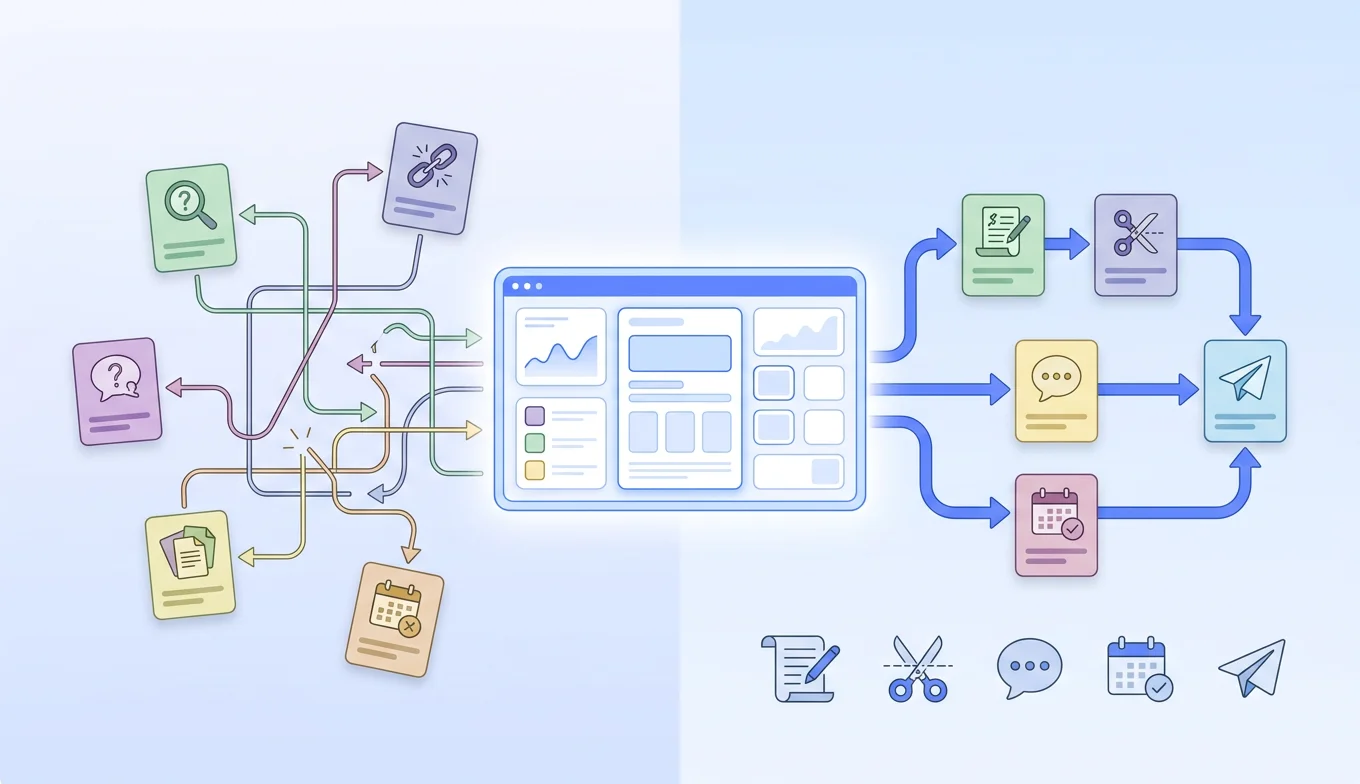
The third category is the one worth comparing, because it is the only one that solves the gap between listings. A real done-for-you video content agency should leave you with two jobs: approving scripts and showing up to record. If you are still writing captions or chasing an editor, you bought a partial service.

The real math is on your time
Start with what your hours are worth. NAR's 2026 Member Profile puts the median REALTOR at $59,200 gross income and 35 hours a week. Spread across a full year, that is roughly $33 an hour before expenses. Top earners value their time far higher, and that is exactly why they delegate.
Now the hours. One agent on r/realtors described a lean routine: "30 to 45 minutes for footage, about an hour of edits" to get "content for at least a week or two." That is the efficient version. Add scripting, captions, thumbnails and posting to four platforms, and most agents land well above that. At the far end, HousingWire reported that loan officer Scott Betley, who built a TikTok audience of 870,000, was spending four to five hours a day on social. Video Husky, an editing vendor, says it saves North Texas realtor Brian White "a minimum of 16 hours per month" on editing alone. Treat that as a vendor claim, but it gives a sense of scale.
Then compare the in-house alternatives. The Bureau of Labor Statistics puts the median film and video editor wage at $75,420 a year (May 2025). Link in Bio's 2025 survey found a median of $85,000 for social media managers. Agencies are cheaper than a hire but rarely cheap: in a survey of more than 600 digital agencies and consultants, 49 percent said their average retainer was $1,000 to $5,000 a month.
Against those numbers, a plan like BIGVU SuperAgent at $239 to $299 a month for eight edited, branded and scheduled videos is a different category of spend. That works out to about $37 a video. The honest test is not whether it is cheap. It is whether it replaces hours you would otherwise lose, or videos you would otherwise never post.

Is it worth it for your type of agent?
The answer depends heavily on where you are in your career. NAR's numbers show how different the business looks at each stage.
- Newer agents. Members with two years or less closed a median of 2 transaction sides and grossed a median of $8,000 in 2025. At $299 a month, a year of done-for-you video is $3,588, almost half of that income. If you are in this group, the cheaper route is usually to film yourself with a teleprompter app and keep the spend for when one closing covers it.
- Established solo agents. Members with 6 to 15 years closed a median of 10 sides. Repeat business climbs with experience, from 10 percent for agents with 3 to 5 years to 49 percent for those with 16 or more. For this group the risk is not cash. It is going quiet with a sphere that should be sending referrals. This is where done-for-you video tends to pay for itself.
- Teams. Teams closed a median of 32 sides, and 17 percent of members already have at least one personal assistant. Teams usually have the money and the footage. What they lack is someone who owns the calendar.
One example of how this plays out: St. Louis agent Jacob Peistrup posted neighborhood videos on YouTube from around 2022 and wrote in 2026 that he finally saw traction after he "handed the editing and technical side to an agency." He says a good week now brings seven or eight leads and that relocation buyers "already know my face." Those are his numbers, posted on Reddit, not audited results. Brian White put the same point more bluntly in his vendor case study: "I wouldn't be able to do video at all without having an editor."

Keeping it authentically you
The biggest worry agents raise about done-for-you video is that it will make them look fake. That worry is reasonable, and the data backs it up.
Pew Research found that 76 percent of Americans say it is extremely or very important to know whether pictures, videos and text were made by AI or by people. In Getty Images' research, 98 percent of consumers agreed that authentic images and videos are pivotal to trust. A 2026 peer reviewed field test of 384 Facebook ads found that an AI avatar got 25 percent more video plays but 38 percent fewer clicks than a human spokesperson. People watched, and then they did not act.
Trust in AI itself is low. Edelman's 2025 flash poll found that only 32 percent of Americans trust AI, compared with 87 percent in China. Agents feel it too. The agent who opened an r/realtors thread on AI marketing worried that when everything feels a little too AI, it starts to lose "the human touch clients actually trust." One self-described buyer replied: "If I can tell AI is being used to interface with potential customers, you have automatically lost me forever ... Use it as a behind the scenes tool." Another agent who uses AI for editing said it works because he will "always base it off original content."
That is the right line to draw. Your face, your voice, your opinions on the market and your real listings should lead. AI and the production team should handle the slow parts: cutting, captions, branding and scheduling. If you use an AI presenter or a talking photo, YouTube asks creators to disclose realistic synthetic content, and being upfront about it costs you nothing.

What consistent video actually does for agents
Here is what the evidence supports, and what it does not.
On listings, the best data comes from rich media generally, not video alone. Zillow reported that its Showcase listings, which use 3D tours and high resolution imagery, were 20 percent more likely to get an accepted offer within 14 days and sold for 2 percent more than similar listings. A UT Dallas study of nearly 43,000 homes found that virtual tours cut average days listed from 34 to 19, with no effect on price. Neither study isolates video, and Zillow sells Showcase, so read both as direction rather than proof.
On your sphere, the case is stronger. NAR's 2025 Profile of Home Buyers and Sellers found that 66 percent of sellers used an agent who was referred to them or one they had worked with before. Video is how you stay familiar to those people between transactions. There is also some research on why it works: a peer reviewed study in Scientific Reports of 372 consumers in China found that when short videos feel useful, viewers trust the seller more, and that trust raises purchase intention. The authors note that intention is not the same as buying.
And the counterpoint deserves a fair hearing. In a 2026 r/realtors thread, one agent asked: "if you stopped posting tomorrow would anything change?" Another answered that "nobody buys houses on social media" and that it is "supplemental, not a replacement for actually meeting people." A third called it "a brand play, not a deal play." Both can be true. Video will not replace prospecting. What done-for-you video can do is keep you visible without taking the hours you need for prospecting. If you want to see what that looks like for your market, book a free 20-minute SuperAgent strategy call.