
How to Capture Video Testimonials That Actually Convert
The difference between a testimonial that drives revenue and one that sits on your website collecting dust comes down to specificity. Generic praise — "they were great to work with" — doesn't move anyone toward a purchase. Specificity does. When a client describes the exact problem they had, what you did to solve it, and the measurable result, that story becomes a sales asset that works 24/7.
The Framework: Problem → Solution → Result
Don't ask clients to "say something nice." That produces vague, unusable footage. Instead, guide them through a three-part structure that naturally produces compelling content. Ask them to describe the situation before they found you and what they were struggling with. Then have them explain what working with you was actually like. Finally, ask for the specific outcome — numbers, timelines, or tangible changes. This framework works because it mirrors the buyer's journey. A prospect watching the video sees their own problem reflected back, sees a credible solution, and sees proof that it works. That's not marketing — it's evidence.The Ask: Timing and Friction
The best time to ask for a video testimonial is immediately after a successful outcome, when the result is fresh and the client's enthusiasm is genuine. Wait too long and you'll get a polite but flat response. To reduce friction, don't ask clients to produce and send you a video. Instead, use BIGVU to set up a simple recording flow. Send them a link with the three guided questions. They record on their phone, and you receive footage that's already structured for conversion. No back-and-forth, no editing confusion.The Edit: Polish Without Losing Authenticity
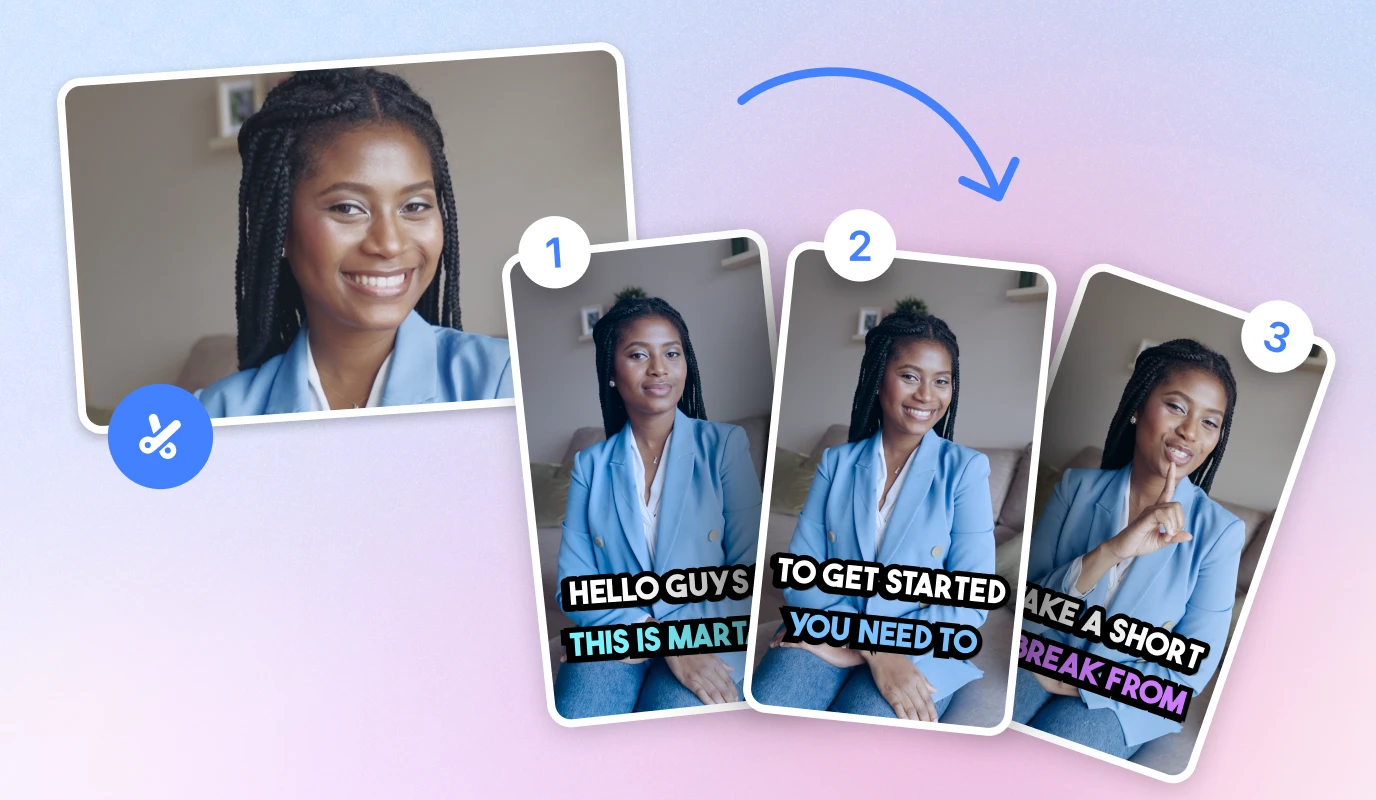
The biggest mistake in editing testimonials is over-producing them. A testimonial should feel real, not rehearsed. Use BIGVU's AI Video Editing to clean up audio, remove long pauses, and add your Brand Kit elements — logo, caption styling, brand colors — so the testimonial looks professional while retaining its raw authenticity. Add captions, because most viewers will encounter this on a feed with the sound off.![[object Object]](/blog/images/airtable/section1-convert-more-leads-with-video-testimonials-instagram.webp)
Why AI Eye Contact Is Your Strongest Trust Signal on Camera
Eye contact is the foundation of human trust. In face-to-face conversation, breaking eye contact signals discomfort, dishonesty, or disinterest — and that instinct carries directly into video. When you look at the camera, viewers feel addressed. When your eyes drift to your notes, your script, or your second monitor, that connection breaks instantly.
This is the hidden cost of using a teleprompter without AI eye contact correction. You gain the benefit of staying on script, but the teleprompter text is usually positioned slightly below or beside the camera lens. That small offset is enough for viewers to subconsciously register that you're not looking at them. Over the course of a two-minute video, that subtle disconnect erodes the trust you're trying to build.
How BIGVU's AI Eye Contact Works
BIGVU's AI Eye Contact feature analyzes your footage in post-production and digitally adjusts your gaze so it appears directed straight at the camera lens. You record naturally using the teleprompter — reading your script, staying on message, hitting your key points — and the AI handles the eye contact in the background. The result is a video that combines the precision of scripted delivery with the intimacy of direct eye contact. You get the best of both worlds: you never lose your train of thought, and your viewer never feels like you're reading to them instead of talking to them.Where AI Eye Contact Matters Most
Not every video needs perfect eye contact — but the ones that drive conversion do. Personalized sales follow-ups, offer explainers, welcome sequences, and any video where you're asking someone to take a next step all benefit enormously from the trust signal of steady, direct eye contact. Combine this with the video testimonials from the previous section, and you create a one-two punch: your clients provide the social proof that you deliver results, and your own videos provide the personal connection that makes prospects feel safe taking the next step. That combination is what turns a viewer into a client.![[object Object]](/blog/images/airtable/section2-convert-more-leads-with-video-testimonials-instagram.webp)
Building a Conversion System That Runs on Trust
Testimonials and eye contact aren't standalone tactics — they're components of a trust-based conversion system. When you deploy them together strategically, each piece amplifies the other.
The Trust Funnel in Practice
Here's how the system works across a typical buyer's journey. At the top of the funnel, a prospect encounters your short-form content on TikTok, Reels, or YouTube Shorts. Your Brand Kit ensures they recognize it as yours. The video uses AI Eye Contact, so even in a quick 30-second clip, you feel present and credible. In the middle of the funnel, they visit your website or landing page and find video testimonials — real clients describing real results in the Problem → Solution → Result framework. These testimonials are edited with BIGVU to look professional while sounding authentic, with captions for accessibility and your brand elements for consistency. At the bottom of the funnel, you send a personalized video message — maybe through email, maybe through DM. You recorded it in one take using the teleprompter, and the AI corrected your gaze so the prospect feels like you're speaking directly to them. This is where deals close.Scaling the System Without Scaling Your Time
The beauty of this system is that the testimonials are evergreen — once captured, they keep working. And your personalized videos take minutes, not hours, when you're using BIGVU's integrated teleprompter and AI editing.- Capture testimonials quarterly: After every successful project or milestone, use the guided recording flow to collect fresh social proof.
- Batch your face-to-camera content weekly: Use AI Scripts to draft your talking points, record with the teleprompter, and let AI Eye Contact handle the post-production gaze correction.
- Distribute with your Brand Kit active: Every video — testimonial or personal — goes out with your logo, colors, and caption styling, compounding brand recognition with every view.
![[object Object]](/blog/images/airtable/section3-convert-more-leads-with-video-testimonials-instagram.webp)